
ChatGPT Ads Are Underperforming. Is Your Agency Paying Attention?

New research suggests paid ChatGPT advertising is underperforming compared to established digital marketing channels. But the bigger question isn’t whether ChatGPT ads work. It’s whether your marketing agency knows when to recommend emerging opportunities, when to test them, and when to invest your budget elsewhere.
What the Brewers’ World Series Victory Teaches Us About the Power of Human Connection

The Milwaukee Brewers’ World Series victory was about more than baseball. From Jake Bauers’ comeback to Pat Murphy’s leadership, Bob Uecker’s legacy, and the loyalty of Brewers fans, their championship offers powerful lessons about human connection, authentic leadership, and what it really takes to build a lasting brand.
Who’s Taking Care of Your Website When the Internet Catches On Fire?

Last week, the internet caught fire. Again. Critical vulnerabilities in PHP, the programming language powering millions of websites, sent hosting providers and system administrators scrambling to deploy emergency patches. A separate Node.js security issue added to the chaos. AI-assisted research helped uncover weaknesses in widely used software, reminding businesses how much they depend on technology they rarely think […]
What the Brewers’ World Series Run Can Teach Us About Turning Interest into Action

For years, I followed the Brewers without ever buying a ticket. This season, that changed—and it revealed a lesson for businesses. Awareness and engagement matter, but lasting relationships, the right trigger, and a clear next step are what turn interest into measurable action.
Your Agency RFP: Built for ROI or CYA?

On paper, an agency RFP makes perfect sense. You figure out what you need. You document the requirements. You invite several qualified agencies to respond. Everybody gets the same information and answers the same questions. You compare capabilities, approaches and pricing, score the responses, and select the winner. It’s organized. It’s objective. It’s fair. And […]
The Question Smart Marketers Are Asking Before They Build Their 2027 Marketing Budget

Your 2027 marketing budget shouldn’t be a copy of 2026 with a few numbers moved around. AI, search and customer behavior are changing how people discover, evaluate and choose companies. Before you build the spreadsheet, make sure your strategy reflects how the customer journey actually works now.
Is Your Marketing Strategy Building your Brand…or Just Buying Customers?

Buying leads can generate business today, but what are you building for tomorrow? A strong marketing strategy connects paid media, search, content, your website, analytics and AI to create lasting brand recognition, authority and customer relationships.
Is Your AI Getting You Into Legal Trouble?

I had dinner recently with an attorney whose role includes helping his firm and its clients navigate AI. So naturally, we spent a good part of dinner talking about AI. We talked about the AI agents we’re building, our AI-hosted podcasts, the ways we’re using AI in marketing and operations, and where all of this […]
When AI Stops Helping…and Starts Hurting…Your Brand

AI can make marketing faster, smarter and more effective. But when speed and volume replace judgment, creativity and authenticity, it can start damaging the brand it was supposed to help. The closer AI gets to your customer, the more important human oversight becomes.
What Happens When AI Knows Your Brand Better Than Your Own Website Does?

We have been building AI agents for ourselves and our clients, and demos for prospective clients. The finished agents use carefully curated knowledge bases made up of approved, proofread source material. We also install guardrails that make those documents the agent’s sole source of truth. If the answer is not in the knowledge base, the […]
When a Brand Becomes Bigger Than Its Biggest Star

Jackie and Shadow became the beloved stars of the Big Bear bald eagle story. Jackie’s death offers marketers a powerful lesson about emotional connection, community and what it takes to build a brand strong enough to carry its audience into the next chapter.
Why Referrals Alone Can’t Create Predictable Growth
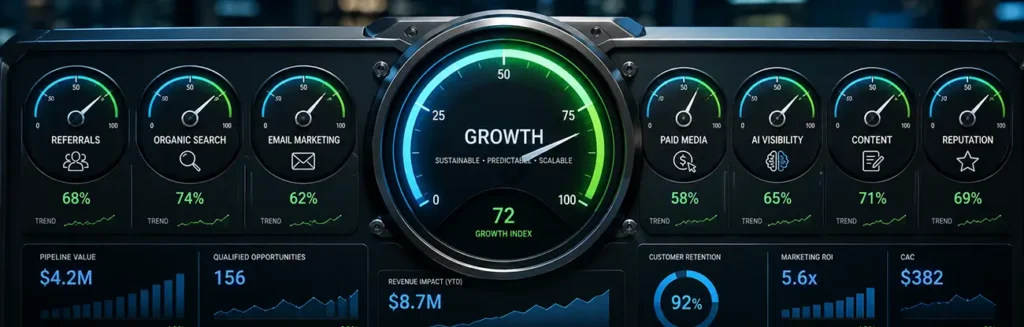
I had an interesting conversation with a business owner the other night. He told me, proudly, that he had no need for digital marketing. “Every job we get comes from referrals,” he said. “We’ve got more work than we can handle. I don’t need SEO. I don’t need advertising. I don’t need any of that.” […]